
January 29, 2026 / Leadership Story Lab
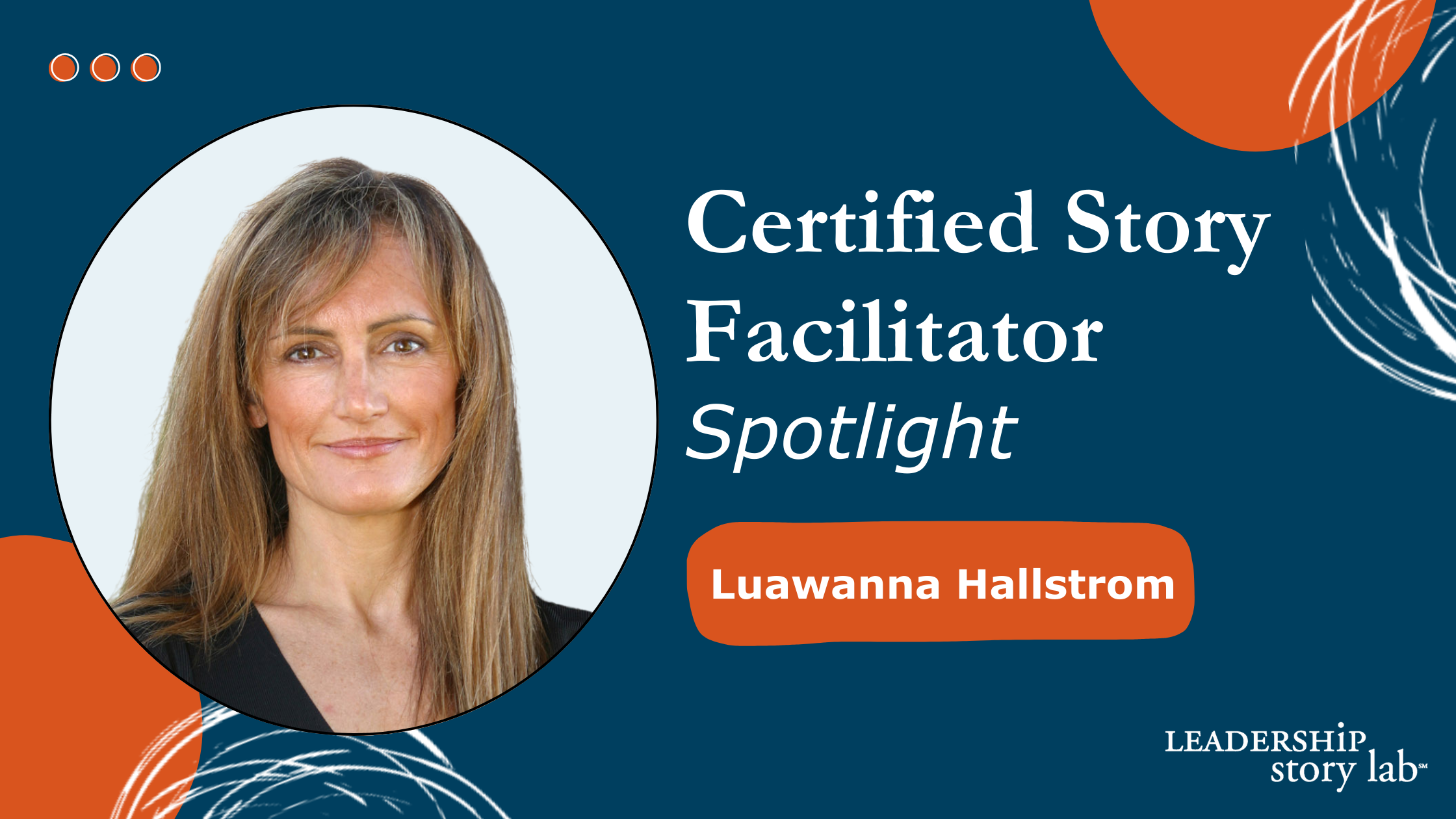
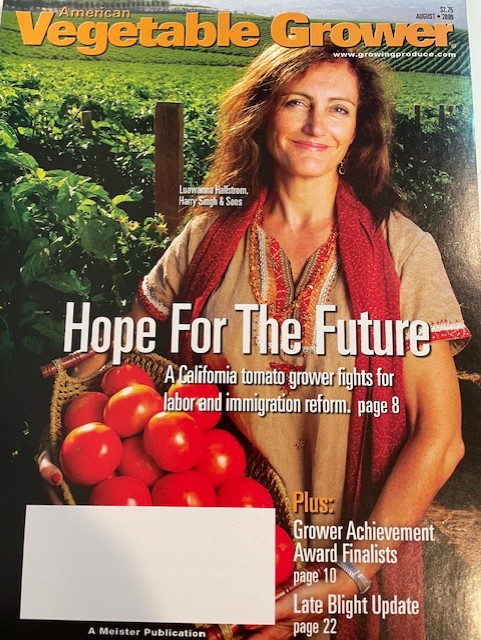
Luawanna Hallstrom, an advocacy and communications professional, grew up on a farm in Oceanside, CA, where her family had been growing since the 1940s. After attending college, she returned to her family farm, which was focused on the crop pole tomatoes. While working to grow the company vertically, she learned it took a village to run a farm. Everyone from “families, cooks, equipment operators, farm workers of many skills and all those industries that supported our operations,” Luawanna shared. “I had a deep understanding of the value everyone brought to the table and how challenging farming could be day to day, season to season and year to year.”
When Congress passed the 1986 Immigration Reform and Control Act, she saw it as a “train wreck waiting to happen.” The Act offered short-term solutions, but did not take into consideration what would happen 5 to 10 years out. The whole village that her family and other farmers needed to run their businesses long term would be destabilized. This motivated her to want to use her voice and get involved in advocacy work for farmers and farm laborers.
Since then, she has worked on state and federal initiatives to promote policy, legislation and understanding of the agricultural industry and workers. She’s testified before Congress, hosted an hour Q-and-A session on immigration on C-SPAN and served as president of the National Coalition of Agricultural Employers (NCAE). In all her roles, she’s used her voice to promote understanding the challenges and needs of agriculture and its people in the United States. Now as a Level 3 certified story facilitator, she is using her voice to help others tell their own stories.
Leadership Story Lab: Tell me more about how you are teaching others right now the importance of telling their stories and using their voice in their advocacy work.
Luawanna: When I first started participating in the national labor forum programs, I would give talks about the value of telling your stories. I would do it in a way where I would be sharing stories throughout as examples. Here’s one story I’ve used to illustrate the power of advocacy:
There was a time when my husband and I were headed out to dinner. We parked our car in the garage. The elevator there is especially slow, and my husband’s not a patient man. There was a crowd of people in front of us, and my husband was tapping away with his foot.
Then my husband said, “Maybe we should take the stairs.” All of a sudden, we hear this voice pipe up. It’s this man’s voice, and he says, “Take them because you can.”
Up in the front was a man in a wheelchair. He couldn’t take the stairs. He had to wait for the elevator to get up to the third floor. So, of course, we decided to take the stairs and we ran up.
Afterwards, I thought about that man’s comment. “Take them because you can.” Do it because you can. Use your voice. Tell your stories. Make a difference. Advocate for the things that you believe in because you can.
Once, after sharing this story at a conference, I was making my way through a corridor and a woman saw me and said, “Oh, you’re the story lady. You know I’m always going to take the stairs because of you. Because I can.”
So that’s a little piece of gold that people were going to remember. Maybe this story will have an impact in the advocacy work for the rest of their lives. Everyday stories can be so impactful.
In my life, I’ve always believed that story was probably the most impactful way to create change. CSF taught me to include the audience in the process. Don’t just talk at them, make them part of the process, because that’s how what you’re teaching becomes really valuable.
A couple of years ago, instead of giving presentations on the importance of storytelling, Luawanna shifted gears and facilitated the Paired Introduction workshop to help people become more familiar with telling their own stories and hearing other people’s stories. She wanted to give her audience the opportunity to “stretch their courage muscle.”
Paired Introduction is the signature exercise where participants learn how to facilitate in Certified Story Facilitator Level 1. It focuses on active listening and the power of asking Crazy Good Questions to help write an intriguing introduction that can be used in conferences, meetings, bios and other professional and personal introduction opportunities.
Now my focus has been about emphasizing the creation of story libraries by conducting one on one story mining interviews. We build story libraries where the client or organization can pull resources and have stories available to support their cause at any particular time.
My challenge has been that it’s often hard to get people to share their stories because they’re afraid — afraid their stories are not powerful enough or important enough.
She helps people overcome this fear by giving them examples! By sharing everyday stories, like her elevator story, she demonstrates the power of sharing stories. At a recent conference, she hosted a panel with people involved at different levels of agriculture called “Amplifying the Voice of Agriculture,” and asked them Crazy Good Questions to help them share their stories and to show the audience that everyone’s voice matters.
All the questions allowed the panel participants to tell their own stories in a variety of ways and then to hold a conversation with the other panelists. My hope is that the audience would begin to identify with their own stories and what’s possible. The immediate feedback was very good and filled with a lot of “Aha” moments.

Leadership Story Lab: How did you find Leadership Story Lab? How did you know that Certified Story Facilitation training was something you wanted to do?
Luawanna: I’d been searching for a long time because as my career was evolving, my advocacy work was also changing.
I thought I’d really like to create my story in a way that I can use that as a platform to go out and speak to larger groups around the country. And I’d been searching for something I could do from home because I was taking care of my husband who had gotten sick some years ago and I needed some flexibility.
I ran across Leadership Story Lab just before COVID happened and Esther decided to try this CSF training over zoom. I was in the inaugural cohort. It was really wonderful how it all played out.
Leadership Story Lab: Yes, that’s great. That first group went through all three levels together.
Luawanna: It was really a powerful and wonderful experience.
Leadership Story Lab: So it’s been a few years since the training. What have been some of the most important takeaways? How are you still tapping into what you learned through CSF?
Luawanna: I’m really glad you included this question, because it’s important to go back and reflect. What have I learned? How am I using it? There are many things with CSF. What CSF has done is to continue to challenge me. It continues to help me stretch —what I call — my courage muscle. I think that’s really important. We never stop learning!
But as far as my main takeaways, I would say one is asking great questions, because that is what creates so many possibilities, and it makes the conversation and people so much more interesting. For example, the question, tell me more is interesting because it creates the opportunity to dig deeper and you never know where it’s going to take you.
Sometimes you will identify things that you didn’t even think about. You will find different directions. You may think you know what direction you want to go into but then something else peaks your interest and you think, “That’s the gem I was looking for!”
I think that’s one of the most important questions to ask. So asking great questions is my first takeaway.
Second is “less is more,” which is really tough for me. But “less is more” is something that has been beneficial for me.
I’ll use this example: my husband is a black and white kind of guy. He’ll ask me a question or he’ll want to know about something. It’s just my nature not to answer the question first. I go into the story — a prelude to the end of getting there.
He’d say, “Can you just answer the question? I just wanted to know X” and I reply, “I’ll get there. I’ll get there.”
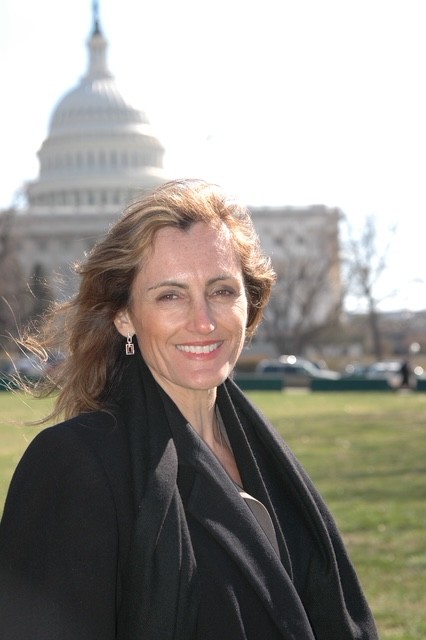
Luawanna Hallstrom in DC using her voice for agricultural workers.
I think for me “less is more” is about the relevance of all of these words? What’s not really necessary? What do people need to know? What do you want them to know? One of the things I’ve learned from this is that you need to let your audience know also that you trust their ability to figure some things out for themselves.
So this really helped me to flush out the stuff that doesn’t help the story. Get out of the weeds. People don’t always need a play by play, right? It’s okay for me to go through that process, but I don’t need to take them on that journey.
My third takeaway is the IRS structure.
To create stories, stories should follow a basic story structure. At Leadership Story Lab, we call it the “IRS” model:
-
- I – Intriguing beginning
-
- R – Riveting middle
-
- S – Satisfying end
That is my scaffolding. I really struggled with that one at first, too, because I’m a free spirit. But I learned structure does not limit my creativity, but rather it expands it. I find often that when I am working on stories in pieces, I am amazed how they either all fall together or I can weed out the stuff that I don’t need.
I’d find as I’m working through a story, I’d get to a point towards the end and say to myself, “Oh, my gosh, this is exactly what Esther was talking about. This is my intriguing beginning.” It’s been a wonderful scaffolding for me, and who doesn’t want a satisfying end they can take to the bank.
Leadership Story Lab: Do you attend the monthly professional development calls?
Luawanna: I do. I’m religious about it. It’s not lost on me what a benefit it is to be able to have all these wonderful people spend their time together. It’s Esther’s energy and knowledge, and everybody coming together and growing and learning together. That’s a rare commodity these days with the limited amount of time that everybody has.
I have had to miss a few because I was hiking down a mountain in Zion National Park and I just could not get reception. But I try to join even when I’m traveling because I appreciate the opportunity. It just continues to feed me and allows me to grow.
Leadership Story Lab: How does Leadership Story Lab compare to other professional development programs you’ve been a part of?
Luawanna: Leadership Story Lab and CSF is very interactive. So many times you go to conferences or you attend programs and you have somebody with slides and they’re giving a lot of insightful information, but they’re talking at you most of the time and you’re furiously taking notes. How many times have you actually had the time to go back through those pages and pages of notes? So the benefit here is that CSF is interactive.
The other high point is that Esther has been able to build a solid group of colleagues that come from very diverse backgrounds that offer insight in various ways through this program. So there are examples of how what Esther teaches us can work in the world. It’s about sharing with others. It’s about supporting others and being willing to try new things.
CSF has built a level of trust which is rare. It’s a hard thing to gain. You have people that are willing to just put themselves out there and try something new. And that’s to me, that’s where the magic happens.
Related Articles
Authentic Leadership: How The Right Questions Unlock Transformation
Here’s Why Curiosity Is A Leadership Skill Nonprofit Leaders Need To Master



Better Every Story
Leadership Transformation through Storytelling
"This is an amazing and insightful post! I hadn’t thought of that so you broadened my perspective. I always appreciate your insight!" - Dan B.
Get Esther Choy’s insights, best practices and examples of great storytelling to your inbox each month.