
December 11, 2025 / Leadership Story Lab
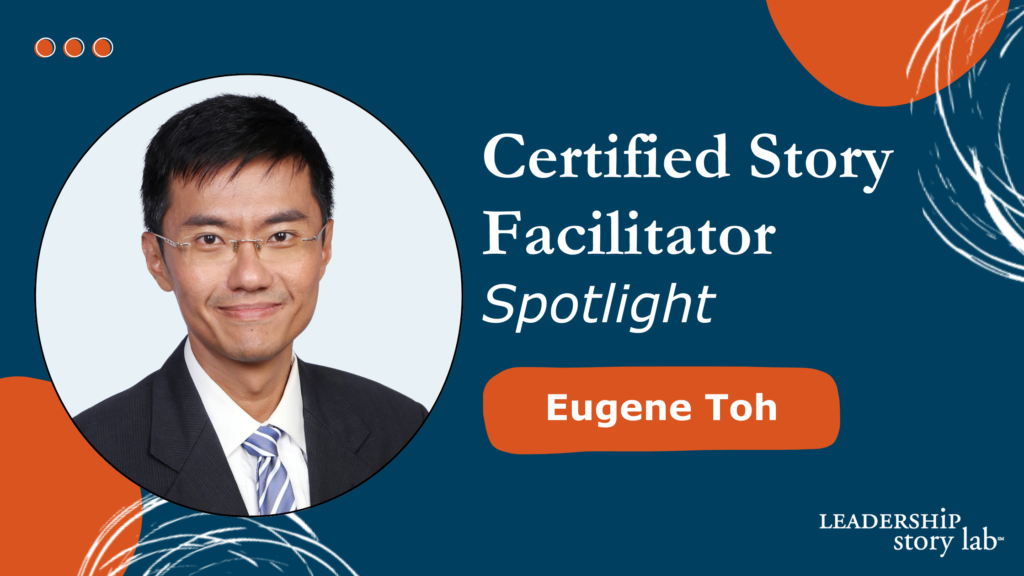 A Level 2 Certified Story Facilitator, Eugene Toh has found storytelling to be a central part of who he is as a leader at work and at church. Serving as an Assistant Chief Executive at Singapore’s Energy Market Authority, where his work revolves around long-term energy strategy and preparing Singapore for a future powered by cleaner and more diverse energy sources. On any given day, he may be deep in a discussion on renewable imports, reviewing system-wide plans, or working with teams to ensure our power system stays resilient no matter what the world throws at us.
Outside of work, he chairs Methodist Welfare Services, which runs nursing homes, family service centers, and community programs across Singapore. About these two roles he says, “EMA keeps me thinking about grids, markets, and megawatts. MWS keeps me thinking about dignity, compassion, and lives lived one conversation at a time.”
Toh mentors younger colleagues by helping them discover their own moral compass, rather than giving them advice. At his church he uses the same skills of listening and question asking to help people understand their faith and themselves with clarity. After publishing Eureka Moments of Leadership: 50 Days to Becoming a Better Leader in early 2025, his newest leadership book: When Stories Speak Louder Than Sermons combines his insights into storytelling and faith in a practical workbook. We are so glad we got to catch up with Eugene and hear how he’s been doing recently.
Leadership Story Lab: We profiled you on our blog in the article “Great Mentors Unlock the Power of Storytelling” in 2022. We featured a story about how your facilitation skills helped someone you were mentoring land her dream job. Have you used storytelling in other mentoring situations since then?
Eugene: I often tell people that one of my favorite ways of mentoring is to tease out leadership dilemmas rather than to offer advice.
One story I frequently use comes from the Changi Chapel Museum in Singapore. During the Japanese Occupation, many British and Allied soldiers were interned there as prisoners of war. The museum preserves their letters, artifacts, and reconstructed chapels — fragile symbols of faith and endurance amid great suffering.
Among the stories displayed is one that has stayed with me for years. It tells of a commanding officer faced with an impossible decision. The captors had issued an order that every prisoner must sign a no-escape pledge — a declaration that they would not attempt to flee.
For the officer, the dilemma was agonising. If he instructed his men to sign, he would safeguard them from potential punishment and preserve unity within the ranks. Yet in doing so, he would also be asking them to renounce one of the core duties of a soldier — to resist captivity and never give up hope of freedom. If he refused, he would uphold honour and morale but risk retaliation from their captors, possibly endangering the weakest among them.
When I mentor younger officers today, I often share this story and invite them to imagine themselves in his place.
“What would you do if you were that officer?”
“Would you order your men to sign, leave it to conscience, or risk defiance?”
“Which matters more to you — the safety of your people today, or the integrity of what you stand for tomorrow?”
I do not claim to have the answer. What matters is learning to sit in that tension — to explore the competing values that define true leadership: compassion versus conviction, prudence versus principle.
This is where Esther’s storytelling training profoundly shaped me. She taught me that stories are not just tools for persuasion but frameworks for reflection. They help people discover meaning for themselves. I learned to use narrative as a way of framing moral questions, not solving them — to let the story do the work of shaping thought and conscience.
Since then, I have used stories like the Changi Chapel one to help my mentees find their own compass. Because mentoring, to me, is not about passing down answers — it is about helping others become the kind of leader they would want to follow when the choices are hardest.

Leadership Story Lab: What a powerful example of using leadership storytelling. Have there been other takeaways from Certified Story Facilitation (CSF) training that have stuck with you?
Eugene: As Chair of Methodist Welfare Services, I often visit our centers to listen, observe, and understand how our work is shaping lives on the ground. In those conversations, I’ve noticed how easily discussions can drift toward outputs and deliverables — attendance numbers, volunteer hours, intervention counts. These are important, but they do not always capture the quiet transformations happening every day.
Through Certified Story Facilitation, I have learned that the right question can uncover meaning more effectively than any report or statistic. When I visit a center, I now ask a different kind of question:
“What was one moment that changed how you saw the people you serve?”
That single question changes the tone of the conversation. Staff and volunteers begin to recall turning points — a resident who finally smiled after months of silence, a family that found stability after years of hardship, or a small act of kindness that restored someone’s dignity. These stories remind us why we do what we do. They draw out conviction and purpose that no dashboard can measure.
Before CSF, I thought storytelling was mainly about communicating messages. After CSF, I see that it is about facilitating reflection and discovery. My role is to help others find language for the experiences that have shaped them — not by giving them stories, but by helping them notice the ones already unfolding around them.
Many colleagues have told me after such visits that these conversations helped them reconnect with their sense of calling. That has been the most valuable takeaway for me — understanding how story can deepen reflection, strengthen morale, and realign hearts around the purpose of our work.
In that sense, CSF has not only enriched how I communicate, but how I listen — because every story, when drawn out thoughtfully, reminds us that transformation often begins quietly, one conversation at a time.
Leadership Story Lab: Thank you for sharing that story of how you used storytelling to help people refresh and reframe their calling. Can you share how the training has helped you see yourself in a new light?
Eugene: This story actually took place before I attended CSF, but it was only after the training that I began to see the framework behind it — how storytelling can unify people through a shared narrative and structure.
A few years ago, I was leading a newly-formed division that brought together three very different teams. One was focused on reducing regulatory red tape for companies. Another protected consumer interests. A third streamlined grant applications for businesses. Each had its own mission, vocabulary, and rhythm of work.
At the start, our meetings were uneasy. Everyone was professional, but you could feel the undercurrent of difference. The “business facilitation” team wanted speed and flexibility; the “consumer protection” team emphasized fairness and caution. The “grants” team focused on process efficiency. Each saw the world through a different lens.
Back then, I did not have a storytelling framework — but I did sense that logic alone would not bring alignment. So I began listening for what motivated each group — what they truly cared about beneath the job description.
Gradually, I realised that, in their own ways, they were all advocating for those who did not have a voice. Whether it was a small business navigating complex rules, a consumer fighting unfair treatment, or a start-up lost in bureaucracy — every unit was helping the “smaller voice” to be heard.
That realization became our unifying story: “Champion for Small Voices.”
The phrase gave everyone a common identity. It reframed our differences as strengths. The team that once debated priorities began co-designing solutions. Quick wins followed, credibility grew, and eventually we took on larger responsibilities together.
After CSF, I can see why it worked. CSF gave me the language and structure for what had been instinctive. It helped me understand how that story followed a clear arc: beginning with empathy, revealing a shared purpose, and anchoring collaboration without losing individuality.
Today, when I work with diverse teams, I apply that same discipline intentionally — to find the story that everyone can belong to. The difference is that now I can explain why it works, not just sense that it works. Storytelling, as I have learned through CSF, is not about persuading people to align; it is about giving them a story they can stand in together.
Leadership Story Lab: Where do you facilitate storytelling and with whom?
Eugene: I facilitate storytelling in two main settings — with younger officers at work and within my church.
At work, I use storytelling as part of group mentoring. When I meet younger officers, I begin with an introduction story, an exercise drawn from Session 1 of the CSF program, which focuses on helping participants craft a three- to five-minute story about themselves. The goal is not simply to introduce their background but to share a moment that reveals something about who they are — their character, values, or motivation.
The process follows a structure similar to what we practiced in CSF: using mining questions to surface meaningful experiences, and then refining them through the I–R–S model — crafting stories that are Intriguing, Riveting, and Satisfying. Participants also take turns introducing each other based on partner interviews, which helps them see how others perceive their strengths.
IRS is Leadership Story Lab’s signature storytelling framework. It breaks down any story into three parts. In our Certified Story Facilitation training, participants learn how to use and to teach this structure in Level 1.
-
- I – Intriguing beginning (about 10% of your story)
-
- R – Riveting middle (about 70% of your story)
-
- S – Satisfying end (about 20% of your story)
This exercise has proven to be a powerful mentoring tool. It helps officers find their own authentic voice, articulate what drives them, and connect with others on a deeper level. What begins as a simple introduction often becomes a moment of self-awareness. It also helps me better understand the people I mentor — not just through their achievements, but through the experiences that have shaped them.
In my church, I facilitate storytelling workshops inspired by the same convictions that shaped my second book, When Stories Speak Louder Than Sermons. These sessions invite participants to reflect on moments when they have experienced grace, forgiveness, or transformation. Using the story-partnering method I learned from CSF, participants pair up to draw out each other’s stories. It is often easier for a partner to spot what is meaningful in your story than for you to see it yourself.
“The most impactful sermons are not those that offer insight into Scripture, but those that touch people with a story. And the most impactful stories are those which are uniquely ours—the ones we see and live. Stories surround us; Esther Choy teaches how to spot them and ask the questions that transform them into something authentic and enduring.”
— Rabbi Asher C. Oser, PhD, Ohel Leah Synagogue, Hong Kong
In both settings — mentoring at work and faith reflection in church — storytelling has become a way to connect experience with meaning. CSF provided the framework to structure these conversations, helping people move from recalling events to discovering insights. Whether with younger officers learning to lead or believers reflecting on faith, storytelling continues to be a bridge between reflection and growth.
Leadership Story Lab: Congratulations on your new book! We’d love to hear another situation where you put story facilitation to work.
Eugene: One situation that comes to mind is when I was speaking to a group of younger officers about ethical decision-making. I told them the story of a street vendor friend whose daughter and son-in-law had applied for a government apartment flat but did not meet the eligibility criteria. Out of frustration, he approached his Member of Parliament for help.
The MP listened carefully but ultimately declined to write an appeal letter. He explained that while he empathised with the family’s situation, the system was built on fairness, and making an exception for one case would compromise the integrity of that principle. My friend was initially disappointed, but later said something that stayed with me: “At least I know he was honest.”
That moment became the basis for our discussion. I asked the officers, “If you were that MP, what would you have done?” The room fell quiet for a moment. Then the answers came — some said they would have tried to help the family out of compassion; others said they would have upheld the rules for fairness. There was no single correct answer, but what mattered was that the story helped them think deeply about what leadership integrity really means — how we weigh compassion against consistency, and when principles must take precedence over popularity.
I later realised that the structure of how I told that story followed what I had learned from CSF’s “Moment of Choice” framework — a structure that brings listeners right into the heart of a dilemma. It begins with context, moves into tension, and pauses before resolution, allowing reflection to take root before closure.
That experience reminded me of something Esther often emphasised — that good storytelling does not resolve discomfort too quickly. It lets the listener do the work of meaning-making. Since then, I have used this approach intentionally whenever I facilitate discussions. Because sometimes, the real power of storytelling is not in answering questions, but in helping others ask better ones.
Leadership Story Lab: How does working with Leadership Story Lab compare to other professional-development programs you have been a part of?
Eugene: Leadership Story Lab differs from other professional-development programs in how it uses human connection through storytelling as the bridge between understanding and influence.
Most leadership courses focus on frameworks, persuasion, or performance — how to structure a message, present evidence, or align a team. Story Lab’s approach begins earlier, at the level of connection. It shows that real influence often comes not from authority, but from empathy — from being able to meet people where they are before trying to move them anywhere else.
Another difference lies in how the program refines the practice of storytelling facilitation. I have found that stories reveal character more clearly than direct questions ever could. In many interviews or mentoring conversations, I used to ask, “Why do you want to do this?” or “What do you believe in?” They were logical questions, but they often led to predictable answers.
After CSF, I began to reframe them. Instead, I would ask, “Can you share an incident that shaped why this matters to you?”
That small change draws out authenticity. People start telling stories that expose what truly drives them — the moments that formed their convictions or tested their values. Their tone, choice of detail, and emotion say as much as their words.
In that sense, Story Lab complements other programs I have experienced. It does not replace analytical skills or strategy frameworks; rather, it adds a human dimension — teaching how to understand people through their lived experiences.
To me, that is its distinguishing feature. It is less about learning to perform stories, and more about learning to perceive them — in others and in ourselves.
Esther’s training taught me to mine for stories rather than wait for inspiration to arrive. Through exercises such as the IRS model, I learned how to peel back the layers of an experience and uncover the deeper insight beneath it.
She also helped me appreciate that good stories begin with human moments — tension, surprise, delight — before moving into meaning. The way she layered questions (“what”, “how”, and finally “why”) trained me to write with greater honesty, emotional depth, and narrative clarity. These were the same techniques I drew on when shaping the reflections and short chapters in my book.
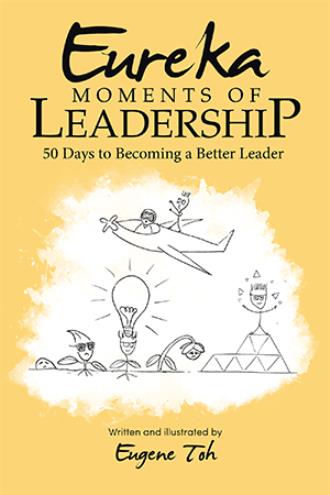
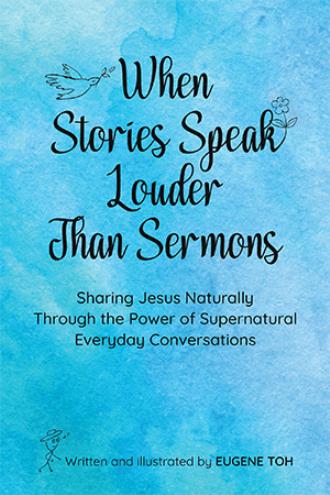
In practice, I applied her methods by journaling daily, capturing leadership episodes using her question sequences, and sketching simple visuals to clarify the emotional center of each story. The structure, rhythm, and sense of progression in my writing today come directly from her facilitation approach — and continue to shape how I tell stories, both on the page and in real life.
Related Articles
A Transformational Perspective: Learn How To See Stories In Everyone


Better Every Story
Leadership Transformation through Storytelling
"This is an amazing and insightful post! I hadn’t thought of that so you broadened my perspective. I always appreciate your insight!" - Dan B.
Get Esther Choy’s insights, best practices and examples of great storytelling to your inbox each month.