
July 20, 2026 / Leadership Story Lab

“I’m not here to sell you anything.”
Seven words. That’s what Amy—Sawyer’s lead salesperson—said when she started her first in-person meeting at the headquarters of a leading retailer.
The buyers looked confused.
True to her words, Amy didn’t pitch. Instead, she explained what Sawyer is, what makes it different, and why Sawyer wouldn’t let the retailer discount their products.
The meeting ended with the retailer agreeing to Sawyer’s pricing and purchasing two new products they hadn’t planned to buy.
“Talk about perking their ears up,” exclaimed Kurt Avery, Sawyer’s CEO, as he shared this Amy’s story with Leadership Story Lab. “How about an intriguing beginning like that? She had their attention right from the get-go.”
The retailer ended up buying two new products from Sawyer.
How does a salesperson walk into one of the world’s toughest retail buyers and close a deal by refusing to sell? The answer is a storytelling framework that’s transformed how Sawyer communicates.
Whether it’s generals who need to equip their troops, retail buyers who control shelf space, or humanitarian organizations saving lives around the world, the principle is the same. A brief brilliant story helps bring people into the conversation with curiosity.
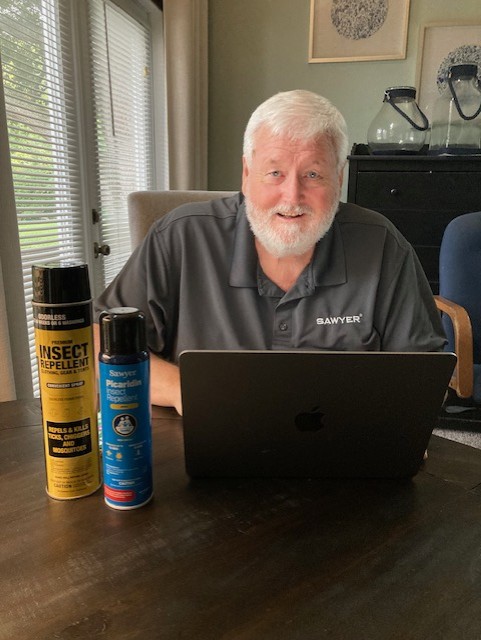
Kurt Avery, CEO of Sawyer
Sawyer: The Company Behind the Story
Known for outdoor products like permethrin-treated clothing and advanced water filters, Sawyer serves disaster relief efforts and communities around the globe where clean water is hard to access. In fact, this company is transitioning into becoming a nonprofit foundation.
For Kurt Avery the ultimate measure of success isn’t revenue. “The real thing we measure is lives.” Kurt shared. “How many lives have we saved? How many lives have we changed?”
To get their products into the hands and backpacks of the people who need them, Kurt and his marketing team needed a way to capture people’s attention. And that requires a story people can’t ignore. But for a company like Sawyer — one that needs to make sure that every dollar spent on professional development has a meaningful return — the intangible nature of communication skills training like leadership storytelling can be a roadblock.

The Framework That Changed Everything
Kurt’s introduction to Leadership Story Lab came at his Northwestern University reunion in 2022, where he signed up for a seminar taught by Esther. To prepare, attendees were asked to write something in advance. Kurt arrived with a line that would become his signature opening:
“We lost money for 23 of our first 25 years, until we became an overnight success.”
This is an intriguing beginning that makes you lean forward and ask questions. An intriguing beginning is the first component of Leadership Story Lab’s signature storytelling framework, IRS.
IRS stands for Intriguing beginning, Riveting middle, and Satisfying end. It’s designed to help leaders craft compelling stories in three moves:
- Intriguing Beginning: Open with something unexpected that sparks curiosity and pulls the audience in before they realize they’re hooked
- Riveting Middle: Identify the central tension and hold it taut, trusting only the most necessary details to carry the narrative forward
- Satisfying End: Circle back to the opening idea, answering the questions raised at the start while leaving space for the audience to reflect
Because it’s a framework based on moves it can be applied to any situation. Whether you are writing a newsletter or creating a sales pitch, preparing for a board meeting or designing a lesson on storytelling, IRS can help you structure the content you want to make sure lands with your intended audience.
For Kurt, IRS captured the importance of storytelling and gave him a way to teach those around him how to write their own intriguing beginnings. He built an internal training program.
From Reunion Class to Company Culture
Sawyer’s training program, Grasshopper U, incorporates IRS principles and other storytelling tools.
Kurt Avery believes in the power of story not only to sell his own products, but to help nonprofits tell the story of their life-saving work. In 2026, Kurt brought Esther in to lead a storytelling workshop for all of their nonprofit partners. Participants from around the globe were introduced to the IRS method and other storytelling frameworks and given a copy of Winning Without Persuading.
Today, no presentation at Sawyer—internal or external—gets made without the IRS framework. The lesson Kurt learned at a class at a reunion is now deeply embedded in Sawyer’s company culture. In fact, Kurt shaped every chapter of his book for entrepreneurs, Sawyer Think, using the IRS framework.
“I teach that to interns every summer, but also I go through it with all our staff,” said Kurt. “I’ve literally gone through the IRS framework, Crazy Good Questions, or just intriguing beginnings every other Wednesday for years. It’s been proliferated. We have had sessions where all we talked about was IRS.”
“It becomes a part of how you think,” Kurt said. “It becomes a part of who you are and how you lead.”

IRS in Action: Weightless Water
Kurt stood in front of a room of military personnel and generals. He knew he only had seconds to capture their attention. He also knew their troops were limited by the 30 pounds of water they had to carry on their backs.
“I’m here to introduce weightless water,” he began. Sawyer’s hollow fiber membrane filters allow soldiers to drink safely from any available water source in the field, eliminating the need to carry water at all.
But rather than leading with technology or specifications, Kurt led with the problem reframed as a possibility. “Weightless water” didn’t describe a product. Instead, Kurt described a world where the problem no longer existed.
The result was immediate: every general wanted to know about Sawyer’s new water filter system.
The Lesson
For Kurt, the lesson is straightforward: if you can’t tell your story in a way that grabs attention and moves people, even the most world-changing products will struggle to find an audience.
No matter your audience, stories bring people into the conversation with curiosity and engagement. Whether you are selling a life-saving product, leading a team meeting, explaining complex data, a brief brilliant story engages your audience’s imagination and creates the space for asking questions, gaining understanding and building trust.
“If you don’t have the audience’s attention,” explained Kurt, “the rest of it’s a waste of time. So you have a good minute or so to get their attention. That’s why we rely on the Intriguing Beginning or Crazy Good Questions. You immediately force [your audience] to participate in the thought process. You’re not talking to them. You’re drawing something out of them.”
Related Articles
Engage Your Audience Immediately With Business Storytelling [Client Story]
What Happens When You Empower Leaders With Outstanding Storytelling Skills



Better Every Story
Leadership Transformation through Storytelling
"This is an amazing and insightful post! I hadn’t thought of that so you broadened my perspective. I always appreciate your insight!" - Dan B.
Get Esther Choy’s insights, best practices and examples of great storytelling to your inbox each month.